

Wildlife Encounters in St. John: Iguanas and Island Adventures
Discover the fascinating wildlife of St. John, USVI, from native iguanas to tropical birds. Learn where to spot these amazing creatures during your charter adventure.
Key Takeaways
Discover the fascinating wildlife of St. John, USVI, from native iguanas to tropical birds. Learn where to spot these amazing creatures during your charter adventure.
Wildlife Encounters in St. John: Iguanas, Sea Turtles, and Island Adventures
St. John is a wildlife lover's paradise. With over two-thirds of the island protected as a national park, the flora and fauna here thrive in ways you won't find on more developed Caribbean islands. From the iconic green iguanas sunbathing on rocks to sea turtles gliding through crystal-clear waters, St. John offers incredible wildlife encounters both on land and in the sea.
Land Wildlife
Green Iguanas
St. John's green iguanas are one of the island's most visible and entertaining residents. These prehistoric-looking reptiles can grow up to 5 feet long and are found throughout the island — basking on rocks, perched in trees, and occasionally wandering across hiking trails.
- Best viewing spots: Cruz Bay waterfront, Caneel Bay ruins, Trunk Bay parking area, along North Shore Road
- Size: Adults reach 4-5 feet including tail
- Behavior: Herbivorous and generally docile, but can be territorial. Don't try to touch them — they can whip their tails defensively.
- Photo tip: Early morning when they're basking in the sun and moving slowly is the best time for photos
Hermit Crabs
St. John is home to thousands of hermit crabs, especially visible along the beach trails and near Salt Pond Bay. After dark, they emerge in large numbers — a flashlight walk along a beach trail after sunset reveals a fascinating nocturnal world.
Bats
Several species of bats inhabit St. John, visible at dusk as they emerge to feed on insects. The Annaberg sugar plantation ruins are a popular roosting spot.
Mongooses
Originally introduced to control the rat population in sugar cane fields, mongooses are now common on St. John. You'll see them darting across roads and trails — quick, curious, and surprisingly bold.
Wild Donkeys
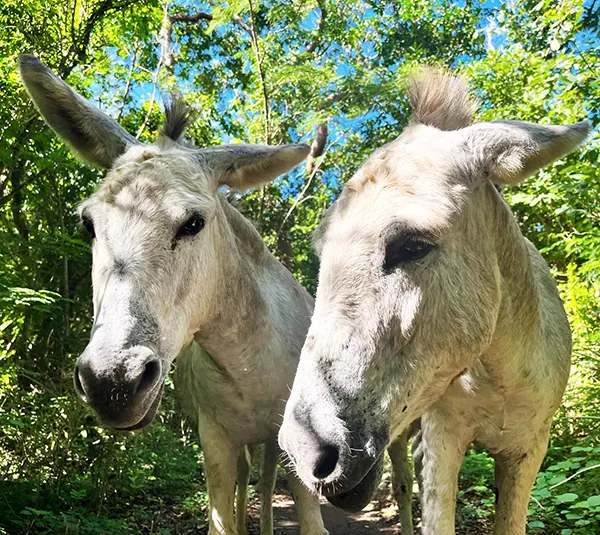
Descendants of donkeys used on sugar plantations centuries ago, wild donkeys still roam parts of St. John, particularly around Coral Bay. They're gentle and accustomed to humans, but keep a respectful distance.
Marine Wildlife
Sea Turtles ⭐ Must-See
St. John's waters are home to three species of sea turtles, and encountering them while snorkeling is one of the most magical experiences in the Caribbean.
| Species | Size | Where to See | Best Time |
|---|---|---|---|
| Green Sea Turtle | 3-4 feet | Maho Bay (nearly guaranteed), Hawksnest, Francis Bay | All day — they feed on seagrass |
| Hawksbill Turtle | 2-3 feet | Trunk Bay, Waterlemon Cay, Cinnamon Bay | Morning for calmer water |
| Leatherback Turtle | 4-6 feet | Rarely seen while snorkeling — nests on beaches | March-July (nesting season) |
Maho Bay is the #1 spot for sea turtle encounters. Green sea turtles feed on the seagrass beds in the shallow water here, and sightings are common year-round, though wildlife is never guaranteed. Float quietly, don't chase them, and they'll swim right past you.
Spotted Eagle Rays
These graceful, diamond-shaped rays with distinctive white spots are frequently seen gliding over sandy bottoms near coral reefs. Waterlemon Cay and Trunk Bay are good spots.
Stingrays
Southern stingrays are commonly spotted resting on sandy patches between coral heads. They're docile and will usually glide away when approached.
Nurse Sharks
Despite their intimidating appearance, nurse sharks are completely harmless to humans. They rest under ledges during the day and are commonly spotted at Waterlemon Cay and Salt Pond Bay. Seeing one is a highlight, not a reason to panic.
Dolphins
Bottlenose dolphins are regularly spotted in the waters between St. Thomas and St. John, particularly in Pillsbury Sound. Charter boats frequently encounter pods — your captain will slow down so you can watch them play in the wake.
Tropical Reef Fish
The reefs around St. John are alive with hundreds of species of tropical fish:
- Parrotfish — Large, colorful, and you can hear them crunching on coral underwater
- Blue Tang — The "Dory" fish, vivid blue and found in schools
- French Angelfish — Elegant gray and yellow, often in pairs
- Sergeant Majors — Yellow and black striped, very curious and will swim right up to you
- Trumpetfish — Long, thin, and surprisingly well-camouflaged
- Barracuda — Intimidating but harmless. They're curious and may follow you — don't wear shiny jewelry.
Bird Watching on St. John
St. John is home to over 160 bird species, making it a surprisingly excellent birding destination:
- Brown Pelicans — Iconic diving birds, seen plunging into the water for fish
- Magnificent Frigatebirds — Soaring overhead with their distinctive forked tails
- Bananaquits — Tiny yellow and black birds, the "sugar birds" that visit restaurant tables
- Green-Throated Caribs — Caribbean hummingbirds found in garden areas
- Great Blue Herons — Found at Francis Bay and other coastal wetlands
Best birding spots: Francis Bay Trail (boardwalk through mangroves), Salt Pond area, and the Annaberg plantation ruins.
Wildlife Viewing Tips
- Be quiet and patient — Wildlife comes to you when you're calm and still
- Never touch or feed wildlife — It's harmful to animals and illegal in the National Park
- Use reef-safe sunscreen — Chemical sunscreens damage the coral ecosystem that supports all marine life
- Bring binoculars — Essential for birding, helpful for spotting dolphins from shore
- Underwater camera — A waterproof phone case or GoPro captures incredible snorkeling moments
- Dawn and dusk — The best times for land wildlife activity
- Book a charter — Experienced captains know exactly where to find turtles, rays, and dolphins
Conservation on St. John
St. John's wildlife thrives because of active conservation efforts. The Virgin Islands National Park, established in 1956 when Laurance Rockefeller donated over 5,000 acres, protects over two-thirds of the island. As visitors, we play a role in conservation by:
- Using reef-safe sunscreen (it's the law)
- Not touching or standing on coral
- Keeping distance from nesting sea turtles
- Disposing of trash properly
- Supporting eco-conscious charter operators
Experience St. John's incredible wildlife firsthand — browse our snorkeling and nature charter excursions.
Book this trip
USVI Sunset & Snorkel Private Powerboat Charter
Sunshine Daydream Charters · 2.5 Hours
USVI Private Power Catamaran Charters: Half or Full Day
Calypso Charters · 3-7 Hours
USVI Sunset Sail: Golden Hour Cruise for 12 Passengers
On the Sea Charters · 3.5 Hours
Continue Reading
Related Articles
Sea Turtle Snorkeling in St. John: Where to Find Them
Best spots to snorkel with sea turtles in St. John.
Ready to Explore the Virgin Islands?
Turn inspiration into adventure. Browse our curated selection of boat charters, excursions, and island experiences.