

Flora & Fauna of St. John
From sea turtles grazing in turquoise shallows to wild donkeys wandering Danish ruins — St. John's ecosystem is as extraordinary as its beaches. Two-thirds of the island is National Park, protecting one of the Caribbean's most intact tropical ecosystems alongside 5,650 acres of underwater coral reef.
144 bird species. 302 fish species. 6 native bat species. 30+ coral species growing on mangrove roots. This guide covers what you'll encounter — and how to protect it.
Marine Life
What you'll see snorkeling and diving around St. John's reefs and seagrass beds. The park protects 5,650 acres of underwater habitat — among the healthiest reef ecosystems remaining in the Caribbean.
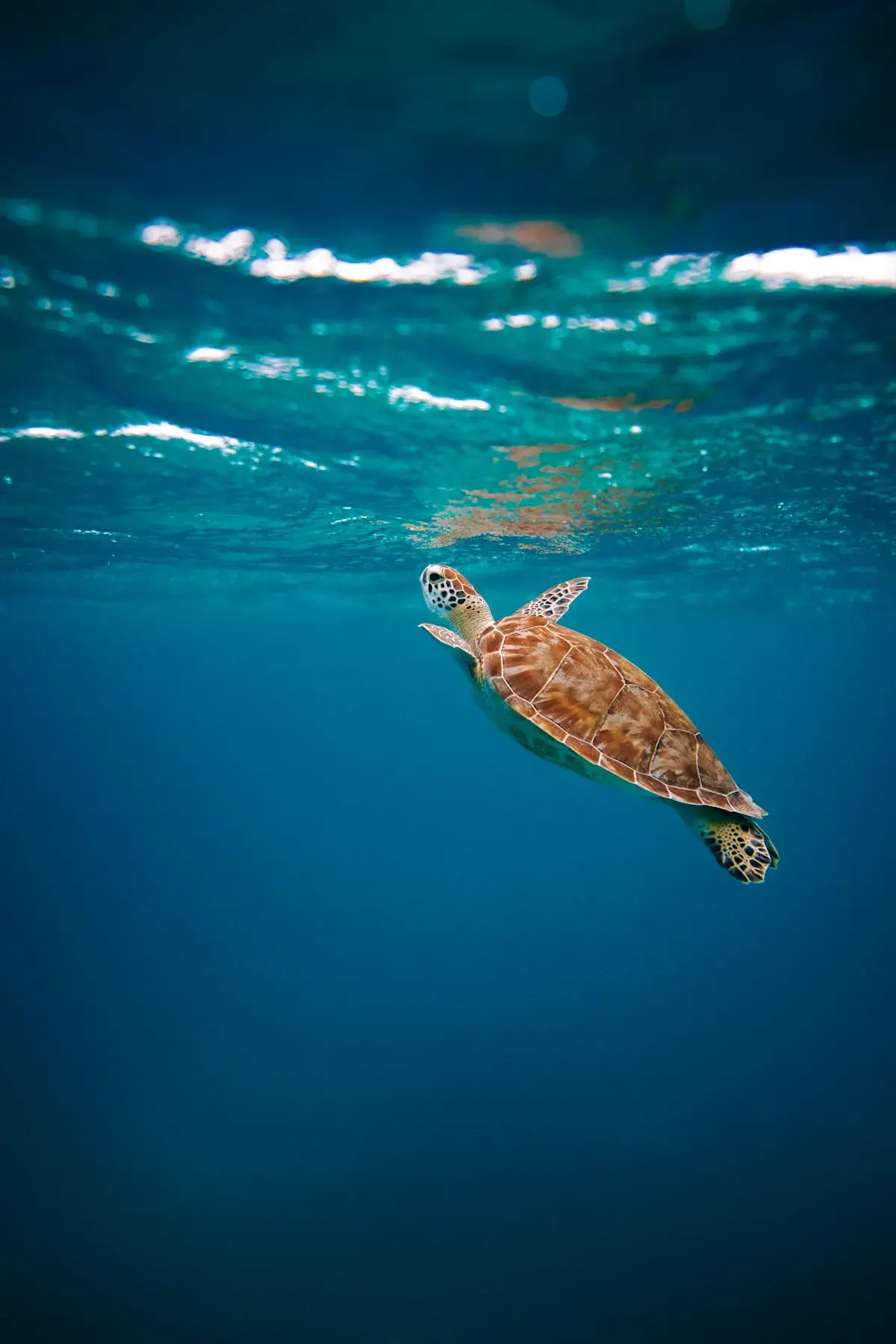
Green Sea Turtles (Chelonia mydas)
The most commonly spotted turtle in the USVI — adults weigh 300–400 lbs and graze on turtle grass (Thalassia testudinum) in shallow bays. Maho Bay is considered one of the most reliable sea turtle viewing spots in the entire Caribbean; you'll often see 3–5 turtles per snorkel session, especially mornings before 10am. They're the only sea turtle species that is herbivorous as adults. Juveniles eat jellyfish and crustaceans before transitioning to seagrass around age 5.
Endangered (IUCN). Protected under ESA. Touching, chasing, or disturbing is a federal crime — fines up to $15,000 and 1 year imprisonment.
Hawksbill Sea Turtles (Eretmochelys imbricata)
Smaller and more colorful than greens, with a distinctive pointed beak evolved to extract sponges from reef crevices — they eat species that are toxic to most other animals, making them critical to reef health by keeping sponge populations in check. Critically endangered — fewer than 20,000 nesting females remain worldwide. St. John's undeveloped beaches are vital nesting habitat. They nest at night on secluded beaches; NPS monitors nests annually.
Critically Endangered (IUCN). Population has declined 80% in the last century. Historically hunted for their tortoiseshell, now internationally banned.
Spotted Eagle Rays (Aetobatus narinari)
Graceful rays with wingspans up to 10 feet, covered in distinctive white spots on dark blue-gray skin. Long whip-like tails with venomous spines (rarely used). They glide over sandy bottoms feeding on mollusks, cracking shells with powerful plate-like jaws. Often seen in groups of 2–5. Best spotted on calm mornings over sandy patches adjacent to reef. They sometimes leap fully out of the water.
Near Threatened (IUCN). Frequently caught as bycatch in gill nets throughout the Caribbean.
Nurse Sharks (Ginglymostoma cirratum)
Docile bottom-dwellers up to 10 feet long, often found resting motionless under coral ledges during the day — they can pump water over their gills without swimming. Nocturnal hunters that eat crustaceans, sea urchins, stingrays, and small fish. They have tiny mouths and small teeth; completely harmless to snorkelers unless grabbed or stepped on. Females give birth to live pups every two years.
Vulnerable (IUCN). Very slow to reproduce, making population recovery difficult.
Caribbean Reef Fish
Parrotfish are the reef's architects — they chew dead coral with fused beak-like teeth and excrete fine white sand. A single large parrotfish produces 200+ lbs of sand per year — literally creating the beaches. Blue tangs travel in massive schools of 50–200, grazing algae. Yellowtail snapper, sergeant majors, four-eye butterflyfish, and French angelfish are ubiquitous. Trumpetfish hang vertically near sea fans, ambushing prey.
Parrotfish fishing was banned in the USVI in 2017 — a landmark decision recognizing their essential role in reef health and beach creation.
Southern Stingrays (Hypanus americanus)
Flat, diamond-shaped rays up to 5 feet across that bury in sand for camouflage, with only their eyes and spiracles visible. Gentle and shy — they flee from humans. Shuffle your feet in shallow water ('the stingray shuffle') to give them warning. Occasionally seen at cleaning stations where tiny cleaner wrasses remove parasites from their skin.
Near Threatened (IUCN). Important mid-level predators in sandy ecosystems.
Barracuda (Sphyraena barracuda)
Silvery, torpedo-shaped apex predators up to 5 feet long with impressive teeth. They look intimidating but pose virtually no threat to humans — they're curious and may follow snorkelers at a distance. Attracted to shiny, reflective objects (remove metallic jewelry while snorkeling). Juvenile barracuda school in mangrove bays. Solitary adults patrol reef edges, controlling smaller fish populations.
Least Concern. Important apex predators — their presence indicates a healthy reef ecosystem.
Queen Conch (Aliger gigas)
The iconic pink-lipped shell of the Caribbean — can grow up to 12 inches over 5–7 years. They're herbivorous sea snails that eat algae and detritus, playing a critical role in keeping seagrass beds healthy. Once so abundant they were used as building material (conch shells are cemented into the walls of old plantation ruins across St. John). Now heavily protected due to decades of overfishing. Their meat is a traditional Caribbean delicacy — fritters, salad, and chowder.
CITES Appendix II. Taking live conch in USVI waters is illegal — fines up to $25,000. Even possessing an undersized conch shell is prosecutable. Empty shells on the beach are OK to keep.
Octopus (Octopus vulgaris)
Caribbean reef octopuses are masters of camouflage — they change color, texture, and even shape in milliseconds to match surrounding coral and rock. Usually spotted by their movement rather than their appearance. Look carefully in reef crevices and under ledge overhangs. They have excellent problem-solving intelligence and short lifespans (12–18 months). They hunt crabs, clams, and small fish, leaving piles of empty shells ('octopus middens') near their dens.
Least Concern. Fascinating indicators of reef health and biodiversity.
Seagrass: The Hidden Foundation
St. John's bays are carpeted with three species of seagrass — turtle grass (Thalassia testudinum), manatee grass (Syringodium filiforme), and shoal grass (Halodule wrightii). These underwater meadows are among the most productive ecosystems on Earth, rivaling tropical rainforests.
→ Seagrass produces oxygen — a single acre generates 10 liters of oxygen per day, more than the equivalent area of rainforest
→ Seagrass beds are nursery habitat for juvenile fish, conch, lobster, and sea urchins — over 70% of commercially important Caribbean fish species depend on seagrass at some life stage
→ Green sea turtles at Maho Bay graze on seagrass daily — their feeding keeps the grass short and healthy, promoting new growth
→ Seagrass roots stabilize sediment, preventing erosion and keeping the water crystal clear for coral reefs nearby
→ An invasive seagrass species (Halophila stipulacea) from the Red Sea has been spreading across USVI waters since 2012, displacing native species and altering juvenile fish communities
→ Seagrass captures carbon 35x faster than tropical rainforests — making these beds critical for climate regulation
Coral Reefs & Conservation
St. John's reefs are fighting for survival against disease, bleaching, and ocean acidification — here's what's growing down there and why it matters.
Brain Coral (Diploria & Pseudodiploria)
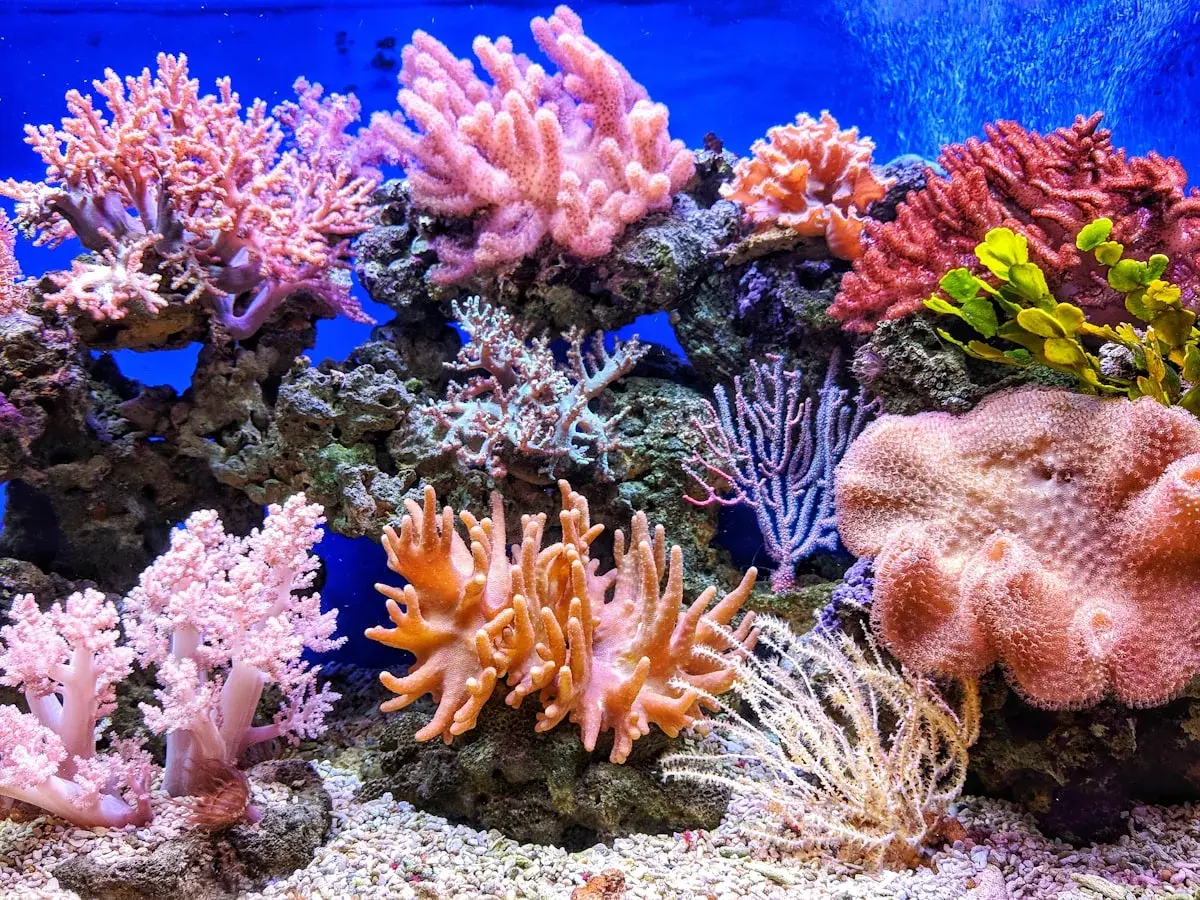
Massive, boulder-like corals with grooved surfaces resembling a brain. Individual colonies can be centuries old and grow up to 6 feet in diameter. They're the foundation of Caribbean reefs — providing hard structure for hundreds of fish and invertebrate species. Some brain corals on St. John reefs are estimated at 300–500 years old — they were alive when the Taíno carved the Reef Bay petroglyphs.
Elkhorn Coral (Acropora palmata)
Once the dominant reef-building coral across the entire Caribbean, creating massive thickets in shallow water that broke wave energy and protected shorelines. Now critically endangered — populations have declined 97% since the 1980s due to white band disease, bleaching, and hurricanes. Henley Cay off Caneel Bay has some of the healthiest remaining colonies in the USVI. Listed under the Endangered Species Act since 2006.
Staghorn Coral (Acropora cervicornis)
Fast-growing branching coral that creates critical 3D habitat for juvenile fish. Also critically endangered — large thickets have virtually disappeared. NPS and NOAA actively cultivate nurseries around St. John, growing coral fragments on underwater 'coral trees' (PVC structures) for transplanting back to degraded reefs. A single nursery tree can produce hundreds of transplant-ready fragments.
Pillar Coral (Dendrogyra cylindrus)
Distinctive upright columns that can grow 8+ feet tall — the only Caribbean coral with polyps that extend during the day, giving it a fuzzy, alive appearance. One of the rarest Caribbean corals. Listed as threatened under the ESA. SCTLD has devastated pillar coral populations — some researchers estimate 90% loss across the Caribbean in the last decade.
Sea Fans (Gorgonia ventalina)
Soft, swaying purple and yellow fans oriented perpendicular to the current to maximize plankton capture. Flexible enough to survive hurricanes that destroy hard corals. Common on deeper reef edges (15–40 ft). When backlit by sunlight, they're among the most photogenic reef organisms.
Fire Coral (Millepora)
Not true coral — it's a hydrozoan closely related to jellyfish. Yellow-brown with smooth surface and white growing tips. Delivers a painful, burning sting on contact that produces raised welts lasting hours to days. Treat with vinegar, then hydrocortisone cream. One of the few reef organisms actually expanding in range as competitors decline.
Hurricane Hole: Where Corals Grow on Mangrove Roots
One of the most remarkable scientific discoveries in Caribbean marine biology was made right here in St. John. In Hurricane Hole — a series of protected bays on the island's east end — researchers found over 30 species of coral growing on the prop roots of red mangrove trees. This is unprecedented. Corals and mangroves don't normally coexist because mangrove waters are too murky, acidic, and variable in temperature for coral survival.
Scientists believe Hurricane Hole corals may represent a 'coral refuge' — these mangrove-adapted corals survive conditions that would kill reef corals, suggesting they may hold genetic keys to climate resilience. The area is now part of the Virgin Islands Coral Reef National Monument, with additional protections enacted in 2001.
How You Can Help Protect St. John's Reefs
- • Use reef-safe sunscreen — zinc oxide only. Oxybenzone and octinoxate are banned in the USVI since 2020.
- • Don't touch, stand on, or collect coral — even dead coral provides structure for reef recovery and new growth.
- • Don't chase or touch sea turtles — federal offense under the ESA. Fines up to $15,000.
- • Rinse snorkel gear between sites — prevents spreading Stony Coral Tissue Loss Disease (SCTLD).
- • Take all trash including food waste. Plastics break into microplastics that corals ingest.
- • Report coral disease — white lesions on coral should be reported to NPS: (340) 776-6201.
Land Wildlife & Birds
From feral donkeys to kleptoparasitic frigatebirds — the animals that call St. John home, how they got here, and their ecological stories.
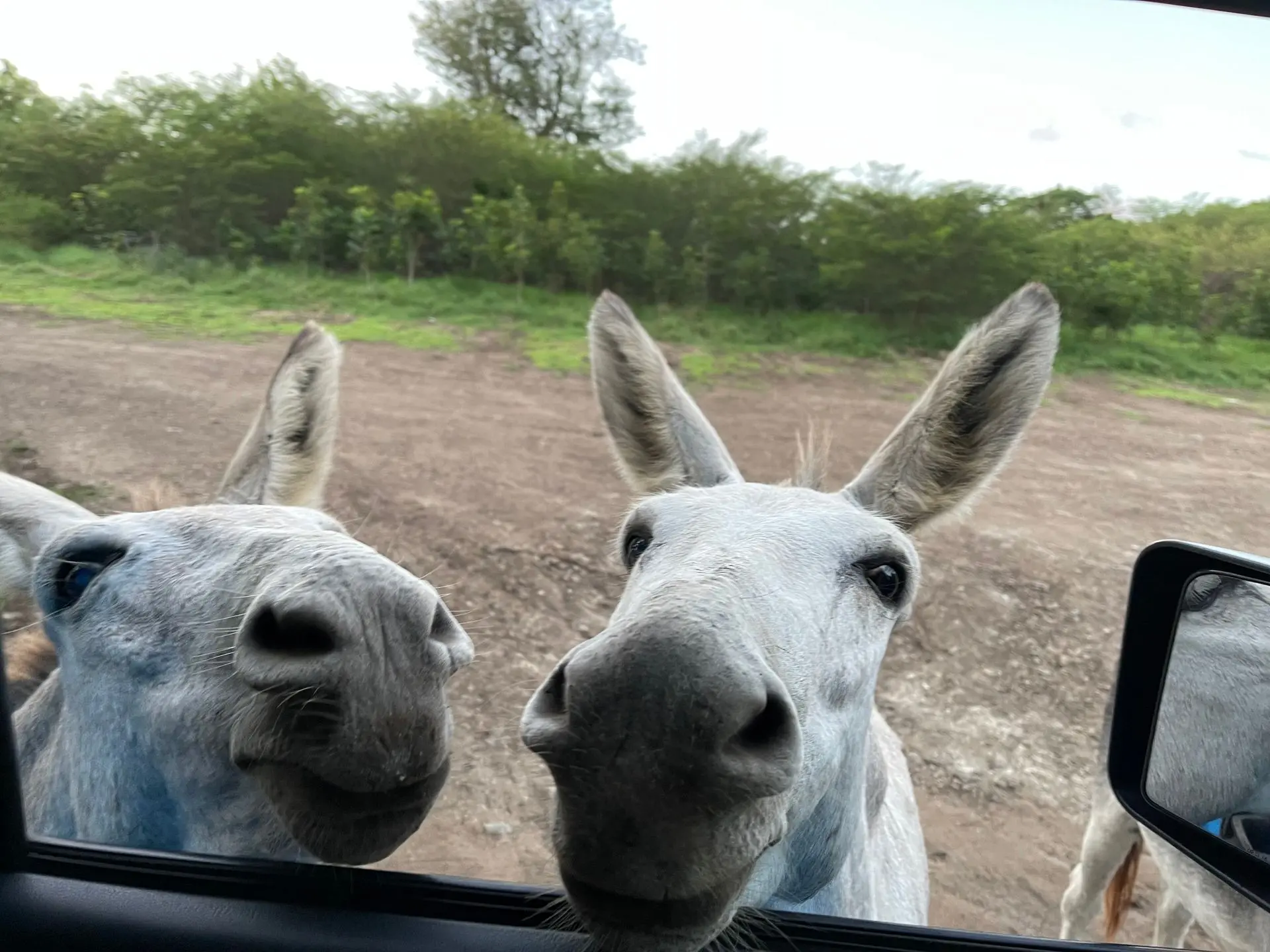
Wild donkeys have roamed St. John freely since emancipation in 1848 — descendants of animals that once powered sugarcane mills.
Wild Donkeys (Equus asinus)
Unmanaged feral — not native, but culturally belovedDescendants of work animals brought by Danish colonists to power sugarcane crushing mills (called 'horse mills') starting in 1718. When plantations closed after emancipation in 1848, the donkeys were released. An estimated 150+ now roam freely across St. John — you'll see them along Centerline Road, in Coral Bay village, at Annaberg ruins, and occasionally wandering North Shore beaches. They're gentle but unpredictable; don't feed them — it causes colic, dental problems, and trains them to approach cars, creating road hazards. Some locals name the regulars: 'Miss Daisy' at Annaberg is a well-known character.
White-Tailed Deer (Odocoileus virginianus)
Invasive — growing population, no natural predatorsIntroduced to St. John for hunting, likely in the early 1900s. The population has grown significantly — a 2021 genetic study found surprisingly low inbreeding despite the small island. They browse native plants including century plants and endangered cacti, threatening native vegetation. Best seen at dawn and dusk along Centerline Road and in the Reef Bay watershed. A growing concern for NPS land managers.
Green Iguanas (Iguana iguana)
Invasive — NPS monitoring impact on native speciesBright green reptiles that can reach 5 feet including tail. Invasive — introduced from South America, likely via the pet trade and hurricane debris rafts. They've established large breeding populations across all three USVI islands and compete with native anole lizards for food and basking spots. They sun on rocks, fences, and roadsides, and munch hibiscus flowers. Harmless vegetarians. The smaller brown anoles (Anolis cristatellus) you'll see everywhere are also non-native — they arrived from Puerto Rico and have largely displaced the native crested anole on lower elevations.
Small Indian Mongoose (Urva auropunctata)
Invasive — one of the 100 worst worldwide (IUCN)Brought from India to the Caribbean sugar islands in the 1870s to control rats destroying sugarcane. The plan failed spectacularly: rats are nocturnal, mongoose are diurnal — they almost never encounter each other. Instead, mongoose decimated native ground-nesting birds, sea turtle eggs, lizards, and snakes. Listed among the world's 100 worst invasive species by IUCN. They're everywhere on St. John — darting across roads, raiding trash cans, and patrolling picnic areas. They've contributed to the extinction of several native reptile species across the Caribbean.
Caribbean Hermit Crabs (Coenobita clypeatus)
Common native — essential ecosystem scavengersLand hermit crabs are abundant on beaches and coastal trails. They can live 30+ years and grow to the size of a tennis ball. During summer full moons, females migrate to the ocean in massive groups — hundreds crossing roads at night in a phenomenon locals call 'crab runs.' They need increasingly larger empty shells to grow into; taking shells from the beach directly harms their population. They're omnivorous scavengers — nature's cleanup crew. At night, listen for them rustling through leaf litter on forest trails.
Bats (6 native species)
Native — ecologically critical, only native land mammalsThe only native land mammals in the Virgin Islands. Species include the Antillean fruit bat (Artibeus jamaicensis), the velvety free-tailed bat (Molossus molossus), and the insectivorous Brazilian free-tailed bat. Fruit bats are critical pollinators and seed dispersers — without them, many native trees including calabash, mango, and century plants couldn't reproduce. Insectivorous bats consume hundreds of mosquitoes per hour. You'll see them at dusk swooping near streetlights and over bays. Completely harmless. Populations were impacted by Hurricanes Irma and Maria (2017) but are recovering.
Antillean Tree Frogs (Eleutherodactylus antillensis)
Native — endemic Caribbean subspeciesTiny frogs (under 2 inches) with an enormous voice — their distinctive 'ko-kee' chorus begins precisely at dusk and continues through the night. The first note ('ko') is a territorial warning to other males; the second ('kee') attracts females. Nearly impossible to spot despite being everywhere — they're well-camouflaged on leaves and bark. Unique among frogs: they undergo direct development, meaning the entire tadpole stage happens inside the egg. Hatchlings emerge as fully formed miniature frogs. Each male defends a calling territory of about 3 square feet.
Brown Pelicans (Pelecanus occidentalis)
Recovered — delisted from ESA in 2009Spectacular dive-bombers that plunge from 60–70 feet to catch fish, hitting the water at 40+ mph with air sacs under their skin cushioning the impact. Their expandable throat pouch holds up to 3 gallons of water — they drain it before swallowing the fish. Once endangered from DDT-thinned eggshells (the pesticide caused shells so thin they cracked under the mother's weight), they've made a remarkable recovery since DDT was banned in 1972. Delisted from the Endangered Species Act in 2009. You'll see them at every dock, harbor, and fishing pier.
Magnificent Frigatebirds (Fregata magnificens)
Native — commonly seen soaring over bays and harborsHuge black seabirds with forked tails and 7.5-foot wingspans — the largest wingspan-to-body-weight ratio of any bird on Earth. Males inflate a scarlet balloon-like throat pouch during breeding displays, which takes 20 minutes to fully inflate. They never land on water — their feathers aren't waterproof, so submersion is fatal. Instead, they're kleptoparasites: they harass other seabirds mid-flight until they drop or regurgitate their catch. They can stay aloft for days, even sleeping on the wing by shutting down half their brain.
American Kestrel — 'Killy Killy' (Falco sparverius caribaearum)
Native resident — Caribbean endemic subspeciesThe smallest falcon in the Americas — about 10–12 inches long. Locally called 'killy killy' for its piercing 'klee-klee-klee' call. They hunt lizards, large insects, and small birds from perches on power lines, fence posts, and dead branches. The Caribbean subspecies (F. s. caribaearum) has more rufous coloring than mainland birds. They hover in place ('kiting') over open ground before diving on prey — impressive aerial control for such a small raptor.
Native & Notable Plants
The trees, cacti, and flowers you'll encounter on trails, beaches, and roadsides — many with centuries of cultural, medicinal, and ecological significance.
Bay Rum Tree (Pimenta racemosa)
Native aromatic tree whose leaves have been used for 300+ years to make bay rum cologne — the signature scent of the Caribbean. Crush a leaf between your fingers and inhale — it's unforgettable, a complex mix of clove, allspice, and eucalyptus. The essential oil was historically distilled with rum by Danish colonists. A grove of bay rum trees on the Reef Bay Trail provides a fragrant canopy that hikers describe as one of the trail's highlights. Trees grow 30–40 feet tall with peeling, cinnamon-colored bark. The berries are used in local cooking.
Century Plant (Agave missionum)
Dramatic spiky succulents native to the Virgin Islands that bloom once after 10–20 years (not 100, despite the name) with a towering flower stalk up to 20 feet tall that grows 4–6 inches per day. After flowering and producing thousands of seeds, the mother plant dies — but it sends up offsets (pups) at its base to continue the colony. The flower stalk attracts bats, hummingbirds, and orioles. Dead stalks are used by locals as lightweight poles. Prominent on the Ram Head Trail and dry coastal hillsides.
Sea Grape (Coccoloba uvifera)
Coastal trees with distinctive round, leathery leaves up to 8 inches across that turn red before dropping. The purple grape clusters ripen August–October and are edible — locals make sea grape jelly, a sweet-tart preserve you can sometimes find at the Cruz Bay farmers market. These trees are critical for beach stabilization, anchoring sand against erosion with extensive root systems. Protected from clearing in the USVI — cutting a sea grape tree requires a government permit.
Turk's Cap Cactus (Melocactus intortus)
Barrel cactus topped with a distinctive red-brown 'cephalium' (the fez-shaped cap) that produces tiny pink flowers and red berries eaten by birds. Native to the Caribbean dry forest. The cacti on the Ram Head peninsula are among the oldest specimens in the USVI, estimated at 100+ years — they only develop the cap at maturity (15–20 years). The official plant of the British Virgin Islands. Threatened by habitat loss, goat browsing, and trampling by hikers — stay on the trail at Ram Head to protect them.
Flamboyant Tree (Delonix regia)
An explosion of scarlet-orange flowers in June–August that makes it the most photographed tree in the Caribbean. Originally from Madagascar, introduced during the plantation era. Called 'flame tree' or 'poinciana' locally. The massive spreading canopy (up to 40 feet wide) provides welcome shade — many of St. John's best shade trees are flamboyants. Seed pods up to 2 feet long hang from branches through the dry season; kids use them as musical shakers.
Manchineel Tree (Hippomane mancinella)
WARNING: One of the most dangerous trees in the world. Every part is toxic — the milky sap causes severe chemical burns on skin contact, the small apple-like fruits are potentially fatal if eaten, and even standing under it during rain can cause blistering as water drips carry sap. Found near beaches and coastal areas. NPS marks known trees with red bands or warning signs. Spanish conquistadors called it 'manzanilla de la muerte' — little apple of death. Despite its toxicity, it's a native species that provides important coastal erosion control.
Ginger Thomas (Tecoma stans)
The official flower of the US Virgin Islands — bright yellow trumpet-shaped blooms that flower year-round, most profusely after rain. Also called yellow elder or yellow bells. Despite the name, it's not related to ginger. A fast-growing pioneer tree that colonizes disturbed land after hurricanes, reaching 20–25 feet. Traditional medicinal uses include tea from the leaves and bark for treating diabetes and digestive issues (used by herbalists across the Caribbean for centuries). A critical nectar source for hummingbirds, bananaquits, and bees.
Lignum Vitae (Guaiacum officinale)
One of the hardest and densest woods in the world — it sinks in water and is self-lubricating. Gorgeous blue-purple flowers. Called 'tree of life' for its medicinal resin (guaiac), used for centuries to treat arthritis and as a diagnostic test in medicine (guaiac fecal occult blood test). Extremely slow-growing and now endangered due to centuries of over-harvesting for ship propeller shaft bearings, mallets, and carvings. Some specimens in the park may be 500+ years old. The heartwood is so dense it was used as natural ball bearings in submarines.
Genip / Kenep (Melicoccus bijugatus)
Small green fruits that grow in clusters — you crack the thin shell with your teeth and suck the sweet-tart, salmon-colored flesh from the large seed. Called 'Spanish lime' in some islands. Peak season is June–August, when vendors sell bags along roadsides. The juice stains everything permanently — locals say 'if you eat genip wearing white, you're not from here.' A beloved local snack and a tree you'll see in yards across St. John.
Tamarind (Tamarindus indica)
Shade trees with distinctive feathery compound leaves and brown seed pods containing tangy pulp used in drinks, sauces, and candy across the Caribbean. Tamarind balls (pulp rolled in sugar) are a traditional USVI treat. The massive tamarind tree in Cruz Bay's park is a local landmark and gathering spot. The wood is extremely hard and termite-resistant. Originally from tropical Africa, introduced centuries ago — now naturalized throughout the Caribbean.
Frequently Asked Questions
See It In Person
Book a charter or tour to experience St. John's nature firsthand: